img

官方微信

高级检索

中国沙漠 ›› 2026, Vol. 46 ›› Issue (4): 77-88.DOI: 10.7522/j.issn.1000-694X.2026.00002

• • 上一篇    下一篇

甘肃省县域农业高质量发展的时空演变及驱动机制

石瑾(), 李港滩, 尚凤仪   

  1. 兰州财经大学 农林经济管理学院,甘肃 兰州 730000
  • 收稿日期:2025-11-24 修回日期:2026-01-08 出版日期:2026-07-20 发布日期:2026-08-27
  • 作者简介:石瑾(1980—),女,甘肃兰州人,副教授,主要从事乡村振兴与区域发展研究。E-mail: shijin@lzufe.edu.cn
  • 基金资助:
    甘肃省哲学社会科学规划项目(2024YB077);甘肃省教育厅高校教师创新基金项目(2024B-085)

The spatiotemporal evolution and driving mechanism of high-quality agricultural development in counties of Gansu ProvinceChina

Jin Shi(), Gangtan Li, Fengyi Shang   

  1. College of Agriculture and Forestry Economics and Management,Lanzhou University of Finance and Economics,Lanzhou 730000,China
  • Received:2025-11-24 Revised:2026-01-08 Online:2026-07-20 Published:2026-08-27

摘要:

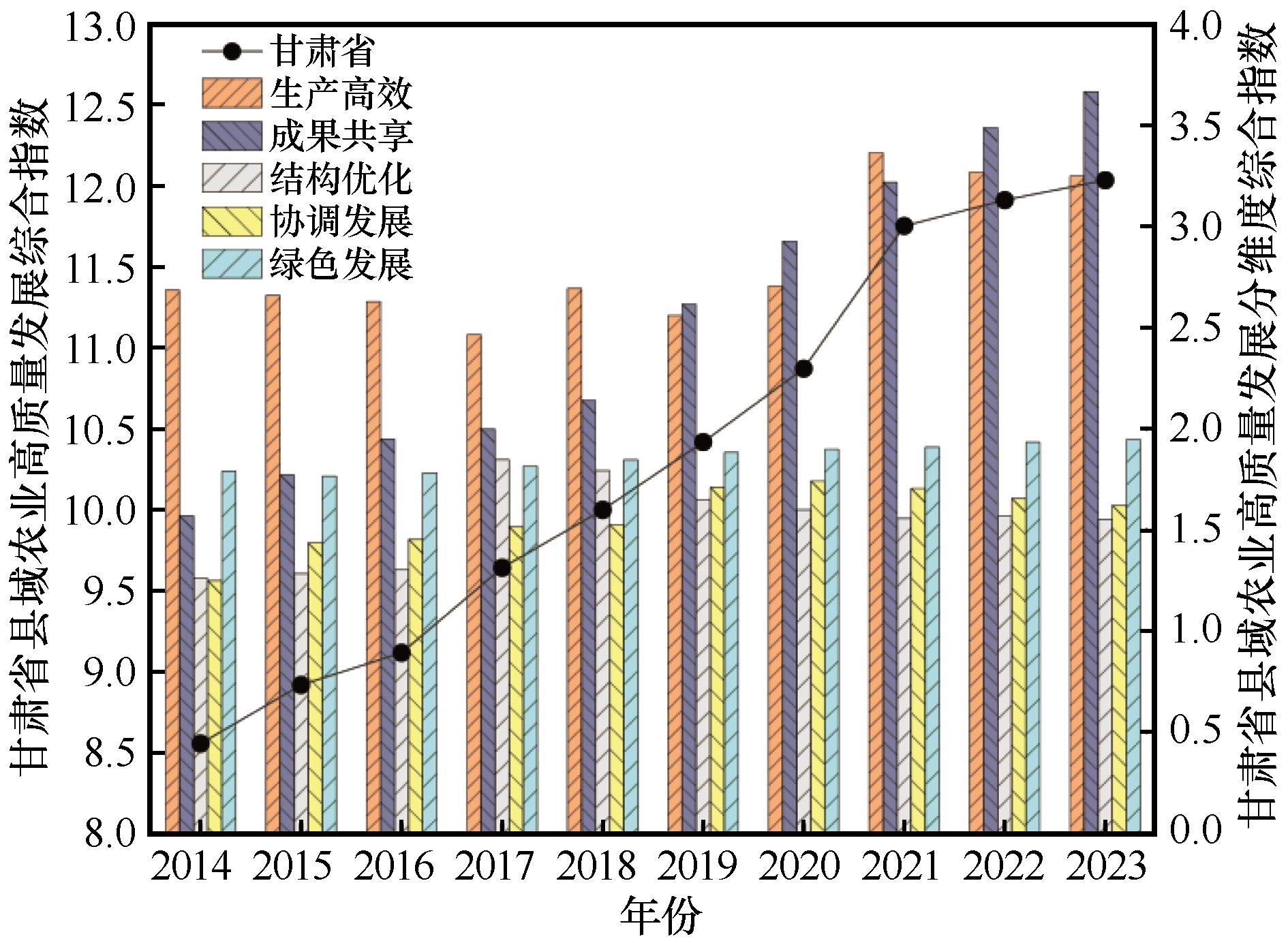
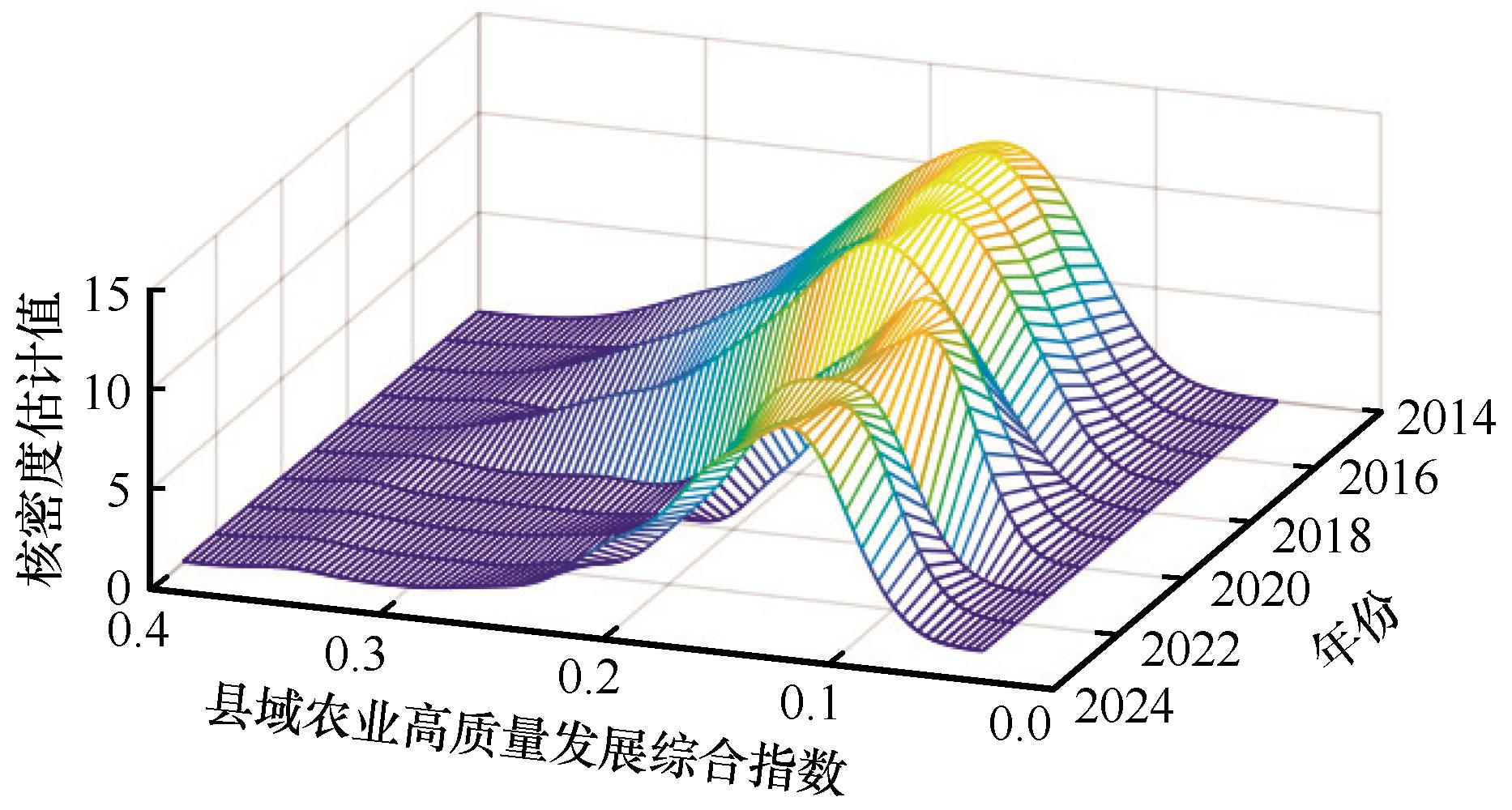
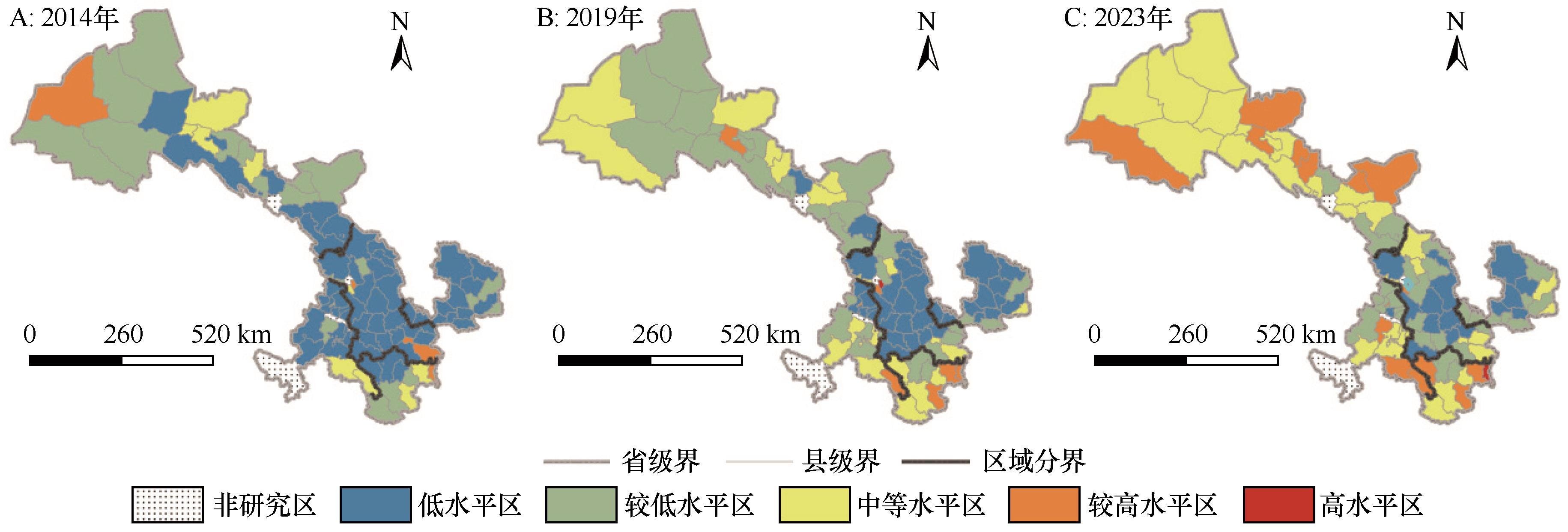
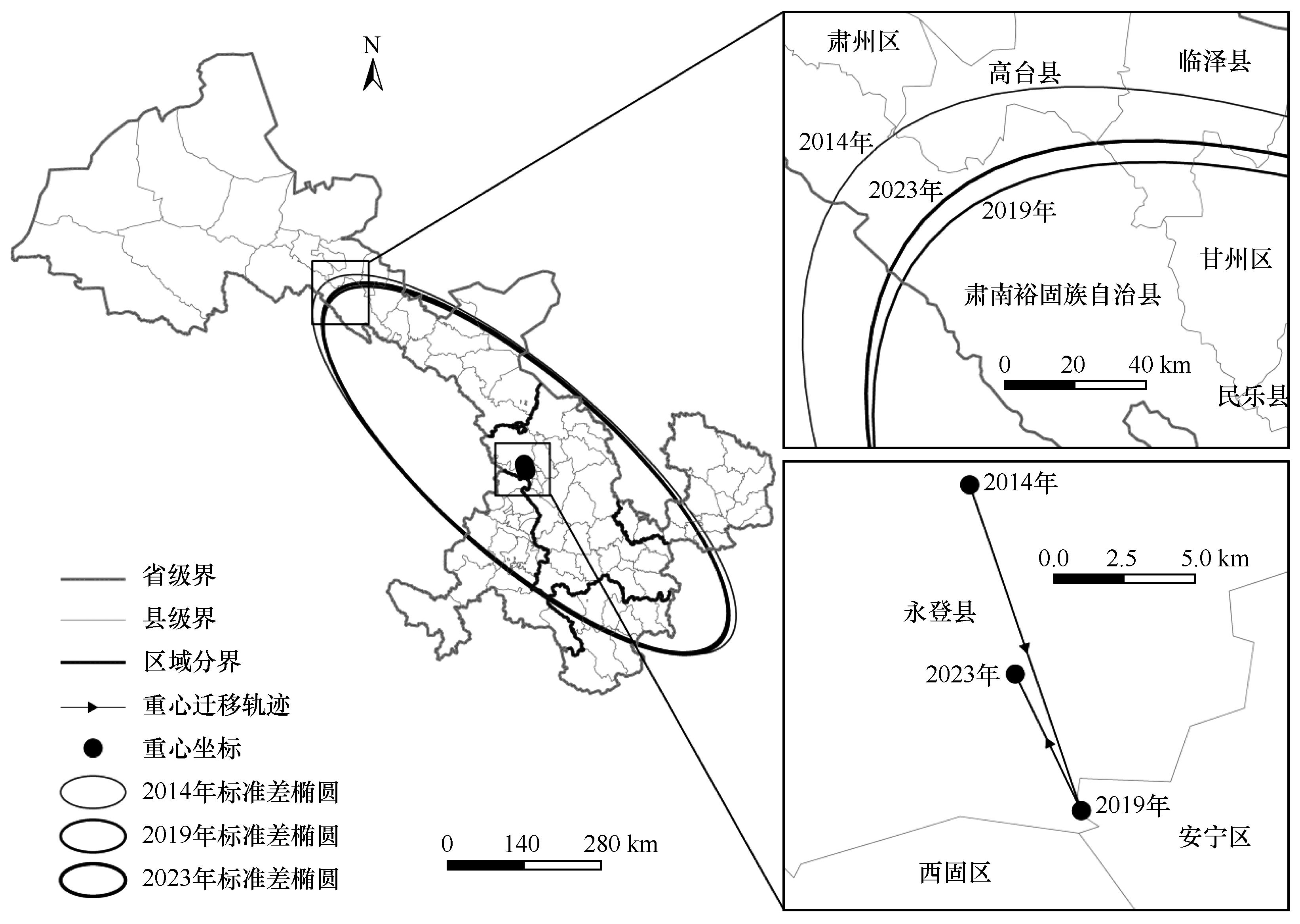
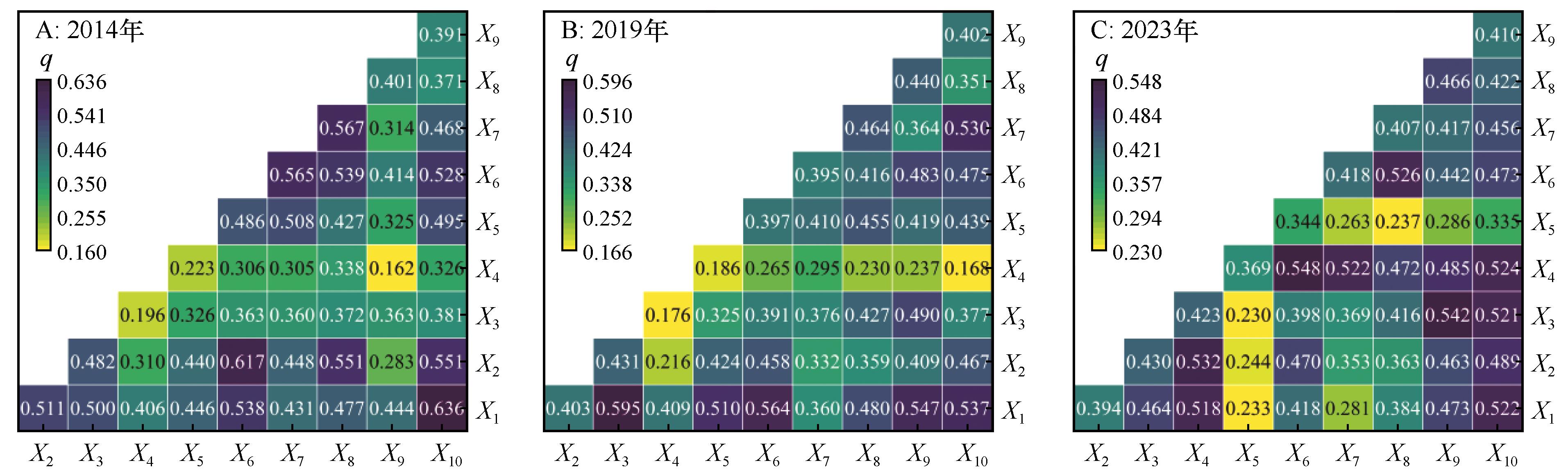
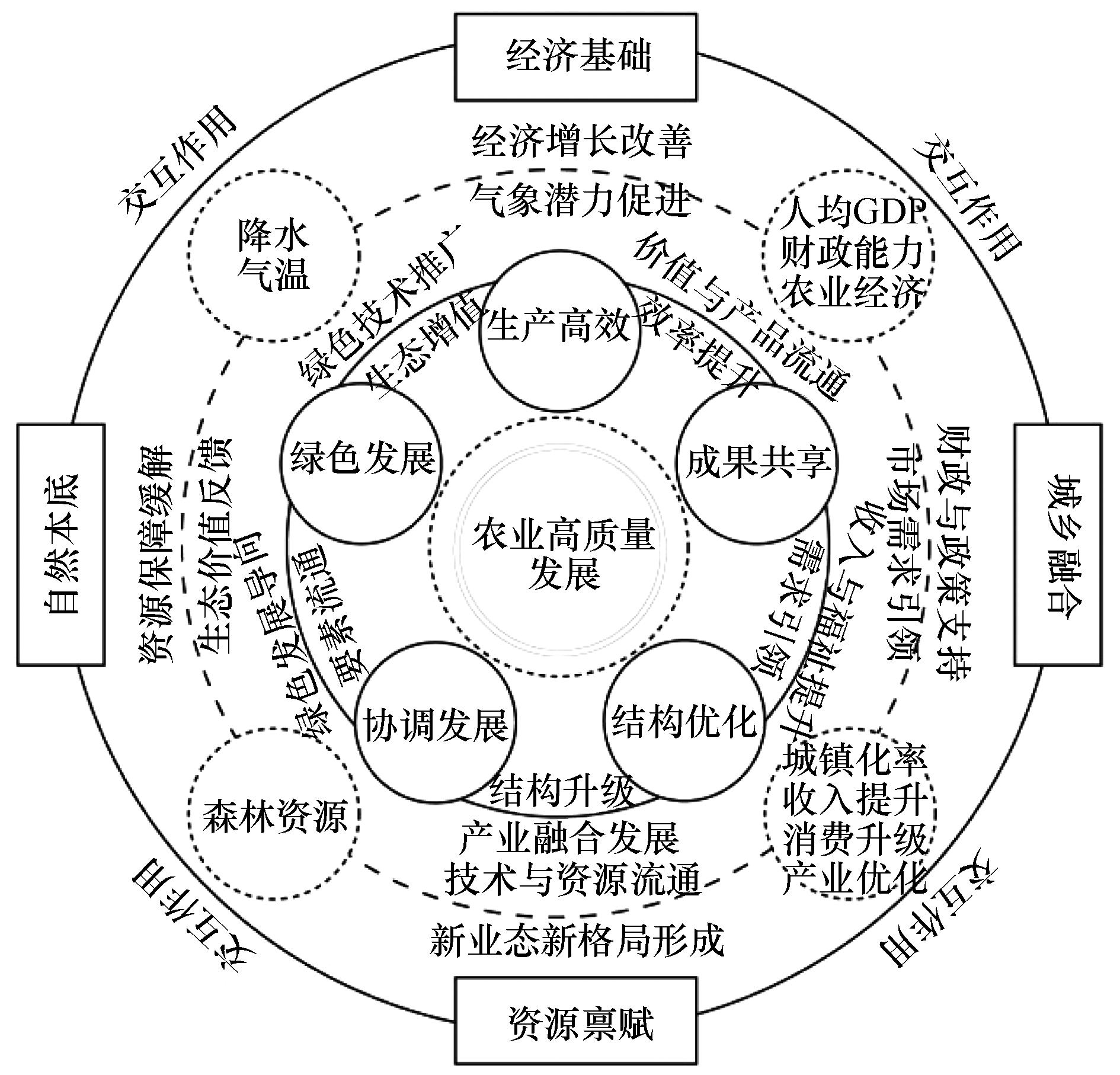
从县域视角评估农业高质量发展,对优化农业资源配置、促进区域协调发展具有重要意义。本文以甘肃省85个县域为研究对象,基于多维度构建县域农业高质量发展评价指标体系,综合运用核密度估计、泰尔指数、标准差椭圆及重心迁移、随机森林与地理探测器模型等方法,揭示2014—2023年甘肃省县域农业高质量发展的时空演变及驱动机制。结果表明:(1)甘肃省县域农业高质量发展水平稳步提升,成果共享维度发展最为显著,绿色发展进程较为滞后;低值县域数逐渐减少,县域间农业高质量发展进入微分化阶段,区域协调性有所增强。(2)县域农业高质量发展总体差异呈收缩趋势,区域内差异是总体差异的主要来源,河西地区差异贡献率最低。(3)空间分布表现为西北高、东南低的特征,较高水平县域数量不断增加,并主要集聚于河西地区;空间形态呈西北-东南向狭长分布,空间重心稳定在永登县境内,且重心有先东南、后西北迁移趋势。(4)县域农业高质量发展是经济发展、城乡融合、资源禀赋与自然本底协同驱动的结果,表现为从自然资源约束主导逐渐转向社会经济驱动为主的特征。研究结果可为甘肃省实施县域农业高质量发展提供科学参考。

关键词: 县域, 农业高质量发展, 时空演变, 驱动机制, 甘肃省

Abstract:

Evaluating the high-quality development of agriculture from a county-level perspective is of great significance for optimizing the allocation of agricultural resources and promoting coordinated regional development. This paper takes 85 counties in Gansu Province as the research object, and based on multiple dimensions, constructs an evaluation index system for the high-quality development of county-level agriculture. By comprehensively applying methods such as kernel density estimation, Theil index, standard deviation ellipse and gravity center migration, random forest and geographical detector models, it reveals the spatio-temporal evolution and driving mechanism of the high-quality development of county-level agriculture in Gansu Province from 2014 to 2023. The results show that: (1) The level of high-quality agricultural development in counties of Gansu Province has steadily improved. The dimension of shared achievements has developed most significantly, while the process of green development has lagged behind. The number of counties with low values has gradually decreased. The high-quality agricultural development among counties has entered a stage of micro-differentiation, and regional coordination has been enhanced to some extent. (2) The overall differences in the high-quality development of county-level agriculture show a contracting trend, with intra-regional differences being the main source of overall differences, and the contribution rate of differences in the Hexi Region being the lowest. (3) The spatial distribution shows the characteristics of being high in the northwest and low in the southeast, with the number of counties at a high level continuously increasing and mainly concentrated in the Hexi Region; the spatial form is distributed in a narrow and long pattern from northwest to southeast, and the spatial gravity center is stable within Yongdeng County. (4) The high-quality development of county-level agriculture is the result of the coordinated driving of economic development, urban-rural integration, resource endowment and natural background, showing a feature of gradually shifting from being dominated by natural resource constraints to being mainly driven by social and economic factors. The research results can provide scientific references for the implementation of high-quality development of county-level agriculture in Gansu Province.

Key words: county, high-quality agricultural development, spatiotemporal evolution, driving mechanism, Gansu Province

中图分类号: